

If you were laid off and planned to apply for Employment Insurance later, the temporary EI measures close for new claims established after October 10, 2026.
That means you should not wait until severance is finalized, paperwork is complete, or your household budget feels perfectly organized. Apply as soon as you stop working.
This is a correction to our earlier article, “Laid Off in Alberta? EI Now Pays Up to $729 a Week While You Keep Your Severance.” That article described the temporary measures as continuing until October 2027. That information is now incomplete. Based on the current published rules, the temporary measures end for new claims established after October 10, 2026.
If your claim was already established before that date, this change does not affect your existing claim.
What Actually Ends, and What Does Not?
The temporary EI measures were introduced to support workers affected by major economic disruption, including tariff-related impacts. Two changes are especially important for Alberta households:
• The one-week waiting period was waived.
• Separation payments were temporarily excluded from the usual EI allocation rules.
For claims established within the temporary period, this could allow a worker to receive EI sooner and avoid having severance, termination pay, or certain other separation earnings delay the beginning of benefits.
For new claims established after October 10, the regular rules return.
In plain English
Under the regular rules:
1. You generally serve a one-week unpaid waiting period before EI begins.
2. Severance, pay in lieu of notice, vacation pay, or other separation earnings may be allocated against your claim.
3. That allocation may delay when EI becomes payable or affect the weeks for which benefits are available.
Think of it as a cash-flow difference.
Suppose your household normally needs $4,000 each month for the mortgage, utilities, groceries, transportation, and insurance. If your employer provides separation pay, that money may help, but it may also mean your EI payments do not begin immediately under the standard rules.
The money has not necessarily disappeared. The timing is different.
That difference matters when you are deciding which bills to pay first, whether to draw from savings, and how long your emergency reserve may last.
You can review the official details on the Government of Canada’s page about temporary Employment Insurance measures.
If You Are Laid Off Right Now, Apply Immediately
The most practical step is simple:
File your EI application as soon as you stop working.
Do not wait to:
• receive your final paycheque;
• settle a disagreement about severance;
• receive every document from your employer;
• update your household budget;
• decide whether you will return to your industry;
• understand every EI rule.
You can apply while some details are still being processed. Service Canada can review your claim using
the information available and request additional details if needed.
Established claim versus application in progress
This distinction is important.
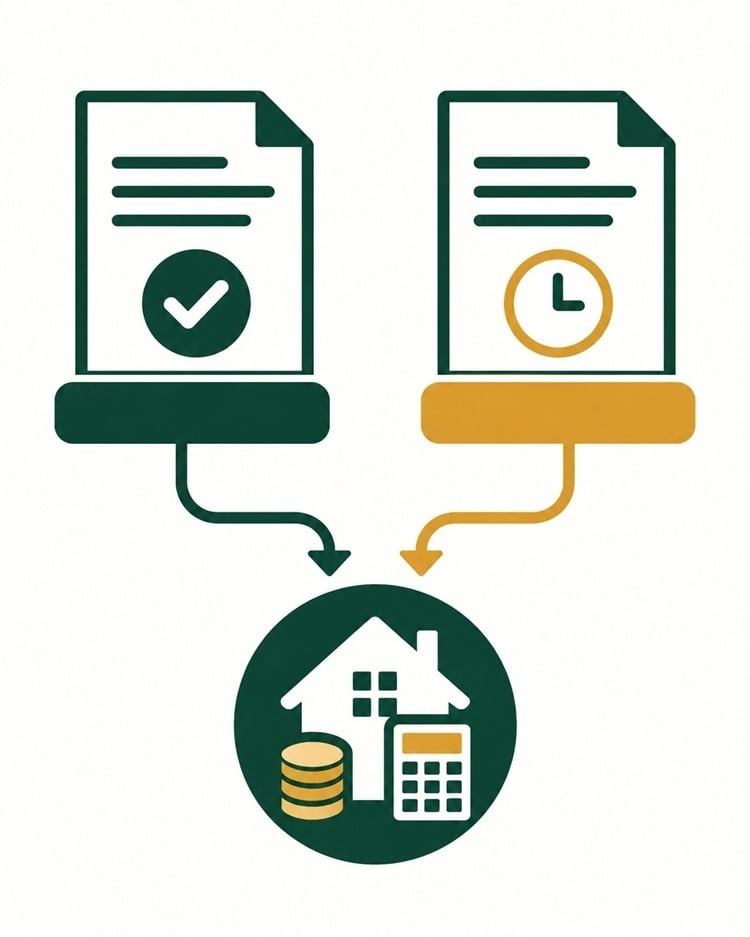
An established claim is a claim for which Service Canada has set the benefit period. An application that has been submitted but is still pending processing may not be the same as an established claim.
If you are trying to qualify under the temporary measures, do not assume that simply starting an application on October 10 guarantees that the claim will be established by that date.
That is why applying immediately is the safest practical step. Keep copies of your application, your Record of Employment, employer correspondence, and information about any severance or vacation pay.
For your own claim dates and eligibility, contact Service Canada directly.
If Your EI Claim Is Already Established
If your claim was established before October 10, 2026, the end of the temporary measures does not change the rules already attached to that claim.
You should still continue to meet your normal responsibilities, including:
• completing your EI reports;
• remaining available for work;
• recording your job-search efforts;
• reporting any earnings;
• reporting changes in your availability or work situation;
• responding to requests from Service Canada.
The temporary measures do not remove these ongoing obligations.
If you are uncertain about what applies to your claim, check your My Service Canada Account or contact Service Canada. Keep your questions specific: ask about your claim-established date, separation earnings, waiting period, and reporting requirements.
Your Household Checklist for the First 30 Days
A layoff is not a personal failure. It is a major change in income, and the first objective is not to solve your entire financial life in one afternoon.
The first objective is to create breathing room.
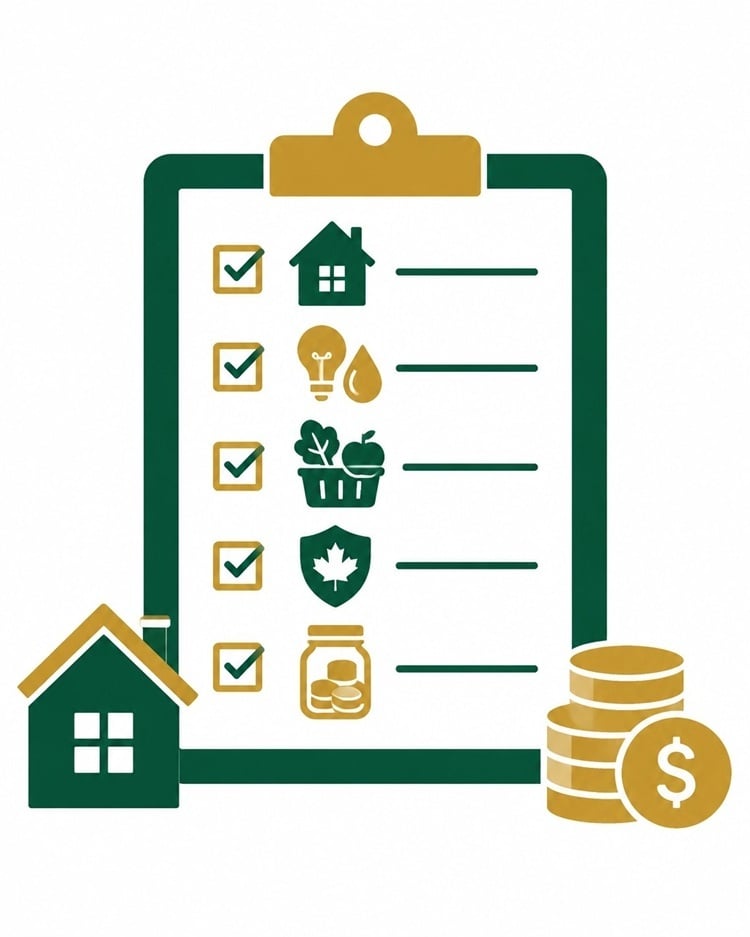
1. Apply for EI immediately
Start the application as soon as you stop working. The official EI application page is the appropriate place to begin.
2. Calculate essential monthly expenses
Do not begin with your entire spending history. Start with the bills that protect your household:
• mortgage or rent;
• utilities;
• groceries;
• transportation;
• medications and essential health costs;
• insurance premiums;
• minimum debt payments;
• child-care or dependent-care costs.
This gives you a practical survival number.
3. Pause non-essential automatic withdrawals
Review subscriptions, memberships, entertainment services, discretionary savings transfers, and other automatic withdrawals.
You do not have to make permanent decisions today. A temporary pause may protect cash while you understand your income timeline.
4. Contact lenders early
If you may have difficulty making a mortgage, line-of-credit, or loan payment, contact the lender before the payment is missed.
Ask what options may be available. Early communication is usually more constructive than waiting until the account is already behind.
5. Check what workplace coverage ends
When employment ends, workplace benefits may also end or change. Review:
• life insurance;
• short-term disability coverage;
• long-term disability coverage;
• health and dental benefits;
• accidental death or critical illness coverage.
Some plans may offer conversion or continuation options, but deadlines and conditions can apply. Ask your employer or benefits administrator promptly.
6. Avoid new high-interest debt where possible
A credit card can feel like a bridge, but high interest can turn a temporary income gap into a longer problem.
Before borrowing, identify the amount you need, the repayment plan, and the total cost.
7. Avoid withdrawing from your RRSP if another reserve is available
An RRSP withdrawal may create tax consequences and permanently reduce retirement savings. If a TFSA or an emergency fund can cover the short-term gap, it may be worth reviewing those options first.
There is no universal answer. Your income, tax position, debts, savings, and household needs all matter.
8. Protect your emergency reserve
Use savings deliberately. Separate essential expenses from optional spending, and review the plan every two weeks.
The goal is not to avoid every dollar of spending. The goal is to preserve flexibility while you search for work and wait for income sources to become clear.
Why This Matters in Alberta
The timing is especially important for workers in industries where employment and income can change quickly, including:
• oil and gas;
• construction;
• manufacturing;
• transportation;
• trades;
• energy-related services;
• forestry and industrial work;
• tariff-exposed businesses;
• contract and project-based employment.
It also matters for households with variable income. A contractor, self-employed worker, commissioned salesperson, or tradesperson may already be accustomed to uneven monthly cash flow. A layoff can make that uncertainty much more difficult to manage.
In these situations, a financial plan should not be built around one perfect month. It should consider:
• the lowest likely income period;
• essential monthly expenses;
• available savings;
• insurance protection;
• debt obligations;
• tax reserves;
• the time needed to find the next opportunity.
That is the purpose of personalized financial planning: bringing the moving parts together so you can make decisions with more clarity.
Review Life and Disability Insurance Before Income Stops
A job loss is also a reminder to review income protection while you are still working and earning an income.
Life insurance may help protect dependents, mortgage obligations, and family expenses if you die. Disability insurance may help replace part of your income if illness or injury prevents you from working.
Coverage is not always easy to obtain after a job loss. Your income, health history, employment status, and insurance needs may affect the available options and costs.
This is particularly important for self-employed Albertans. One commonly cited estimate based on Statistics Canada data suggests that only about one quarter of self-employed Canadians hold disability insurance. Many people insure their vehicles, homes, and tools while leaving their most important asset, their ability to earn, less protected.
That does not mean every person needs the same policy. It means the question deserves attention.
Ask:
• What coverage do I have through work?
• When does it end?
• Can I convert or continue it?
• How much of my monthly income would need replacing?
• How long could my household manage without income?
• Would my mortgage and essential expenses continue to be paid?
You can learn more about the general purpose and features of disability insurance through the Financial Consumer Agency of Canada. For personal recommendations, a qualified insurance professional should review your circumstances.

What About the January 1, 2027 EI Change?
The maximum weekly EI benefit remains $729 per week under the current 2026 figure.
On January 1, 2027, maximum insurable earnings are scheduled to rise to $70,800. This ceiling affects both the maximum earnings used to calculate EI benefits and the amount of EI premiums paid on insurable earnings.
Your actual benefit will depend on your insurable earnings, regional unemployment rate, insurable hours, and personal claim circumstances. The Government of Canada explains that regular EI benefits are generally calculated at up to 55% of average insurable weekly earnings, subject to the applicable maximum. You can review the official EI benefit calculation information.
The Next Step Is Small but Important
If you were laid off, start with the application.
Then list the bills that must be protected. Call the lender before a payment is missed. Check your workplace coverage. Preserve your cash reserve. Ask questions when the rules are unclear.
You do not need a perfect plan before you begin.
At JK Asset Management, we help Alberta families review income protection, insurance, debt, investments, retirement goals, and emergency planning together. We listen first, explain the options in plain language, and help you decide what may be appropriate for your situation.
There is no obligation to have substantial savings or a finished financial plan before starting a conversation.
Contact JK Asset Management
• Website: https://www.jkassetmanagement.ca/index
• Phone: (780) 399-5471
• Email: kapler@jkassetmanagement.ca
• Contact page: https://www.jkassetmanagement.ca/contact
No Family Left Behind.
Educational disclaimer: This article is general information only and is not legal, tax, employment, or individualized financial advice. EI rules, claim dates, benefit amounts, and treatment of separation payments can depend on your specific circumstances and may change. Contact Service Canada for official information about your claim. Speak with qualified professionals before making decisions about insurance, investments, retirement accounts, debt, or taxes.